
Why We Say “Negative,” Not “Clean”
If you’ve spent any time on a dating app, you’ve seen it: “clean” as shorthand for a negative STI status. It feels harmless. It isn’t. “Clean” implies its opposite: that someone living with an STI, or with HIV, is somehow dirty. That framing doesn’t just sting, it changes behavior. People delay testing because they don’t […]

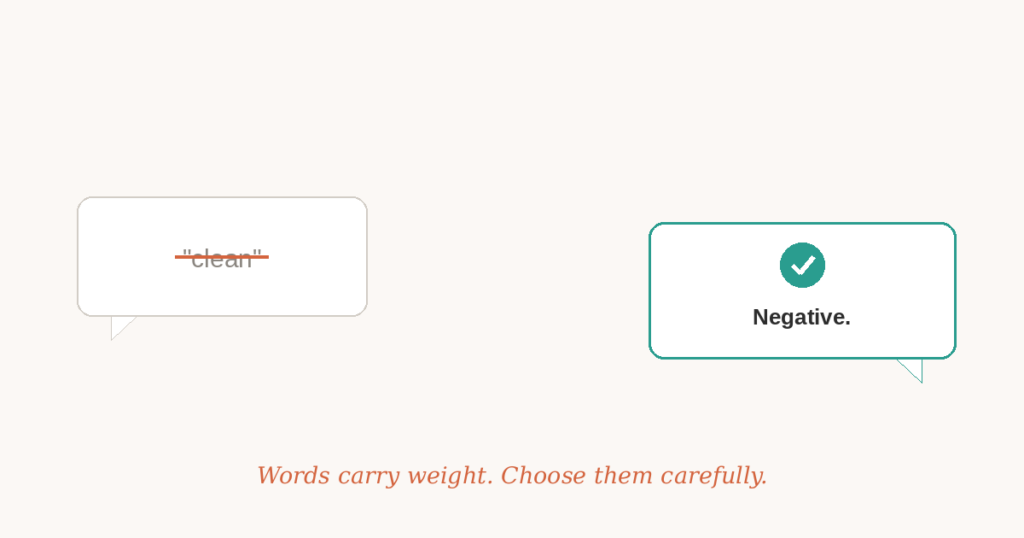
If you’ve spent any time on a dating app, you’ve seen it: “clean” as shorthand for a negative STI status. It feels harmless. It isn’t.
“Clean” implies its opposite: that someone living with an STI, or with HIV, is somehow dirty. That framing doesn’t just sting, it changes behavior. People delay testing because they don’t want to risk being on the wrong side of that word. People avoid disclosing a positive result because “clean” has already taught everyone what the alternative sounds like.
Why “clean” does harm
Stigma is one of the biggest reasons people skip testing altogether, and skipped testing is how transmission chains continue quietly in the background. A single word, repeated enough times in enough profiles, can end up doing real damage to public health, not just to someone’s feelings.
It’s a small word carrying a large assumption: that a positive result says something about a person’s character, rather than just their most recent test.
What medical language does instead
Medical language doesn’t moralize. “Negative.” “Positive.” “Undetectable.” “Untransmittable.” These words describe a test result, not a person’s worth. That distinction matters more than it sounds like it should.
This is part of why we built Protecht the way we did. When you share a verified result through the app, it’s just that: a result. A timestamp, a status, a source. No moral framing baked into the language, no shame built into the interface. Just the truth, presented plainly, for the person who’s decided to trust you with it.
The words we build around
Small word choices add up to a culture. We’d rather build toward one where testing is normal, disclosure is safe, and “negative” is just a fact, not a badge.
Ready to bring your own?
Download Protecht and share verified status in seconds, not screenshots.
Sources:
CDC, National Overview of STIs in 2023 — https://www.cdc.gov/sti-statistics/annual/index.html

Carry your receipts, not just your word.
Pull your provider-verified results and share a negative status the safe way. Free to download.