The Hidden Connection: Why Bacterial Vaginosis Screening Should Include STI Testing

A new study of more than 1.5 million women just confirmed something clinicians have suspected for years: bacterial vaginosis rarely travels alone.Researchers analyzing lab data from Quest Diagnostics and Hologic found that women who tested positive for bacterial vaginosis (BV) were roughly three times more likely to also test positive for chlamydia, gonorrhea, or another non-viral STI compared to women who tested negative for BV. Of the women in the study who had BV, 12 percent were co-infected with at least one STI, compared to just 3.8 percent of women without BV.It’s the largest study of its kind, and it reinforces a message that’s easy to miss when symptoms seem straightforward: one diagnosis doesn’t rule out another.

It’s Not Always Just One Thing

BV is extremely common. Nearly a third of women in the U.S. will experience it at some point, and it happens when the vaginal microbiome shifts away from its usual Lactobacillus-dominant balance. Symptoms like discharge, odor, and irritation often overlap with those of chlamydia, gonorrhea, and trichomoniasis, which makes it easy to assume a BV diagnosis explains everything.

But the new data says otherwise. Nearly 39 percent of the women tested were positive for BV, and of those, more than 1 in 10 also had an STI they might not have known to test for.

That gap matters. Untreated STIs can lead to more serious reproductive complications down the line, and the CDC has long recommended STI testing alongside BV treatment for exactly this reason. This study gives that guidance real numerical weight.

What the Data Actually Shows

The research team analyzed deidentified lab data from women aged 15 and older who were tested between 2022 and 2024. After adjusting for other factors, BV-positive status was strongly associated with higher odds across multiple STIs, including chlamydia, gonorrhea, and trichomoniasis. Researchers noted that changes in the vaginal microbiome may increase susceptibility not just to BV but to other infections as well, including HIV.

The takeaway from the study’s senior researcher was straightforward: STIs can lead to serious reproductive and other health complications when left undetected and untreated, and the data reinforces the value of a comprehensive diagnostic approach rather than testing for one condition at a time.

Testing Beyond Symptoms

Here’s the pattern worth internalizing: symptoms are not diagnoses. A single test result answers a single question. If a provider is only testing for BV because that’s what the symptoms suggest, a coexisting chlamydia or gonorrhea infection can go completely unnoticed.

Modern molecular testing makes this less of a tradeoff than it used to be. A single specimen can now screen for multiple conditions at once, which means comprehensive testing doesn’t have to mean multiple visits or invasive follow-ups. It just means asking for the fuller picture instead of settling for a partial one.

This is true whether you’re managing symptoms, doing routine screening, or getting tested before or after a new partner. The conditions most likely to hide behind a BV diagnosis, chlamydia, gonorrhea, and trichomoniasis, are also among the most treatable when caught early.

The bottom line: a BV diagnosis is a reason to test more thoroughly, not less. Comprehensive testing catches what single-condition testing misses.

Know Before You Share

There’s a second layer to this data that matters just as much as the clinical one: what you actually know about your own status shapes what you can honestly share with a partner.

If a test result only covers one condition, it only tells part of the story. A verified, comprehensive panel gives a fuller and more honest picture, which means the person on the other end of a disclosure conversation is getting the full truth, not an incomplete one.

This is exactly the gap Protecht was built to close. Results are pulled directly from your healthcare provider, covering the eight most common STI conditions, and stored securely on your device. Nothing is uploaded, edited, or filled in after the fact. What you share is what your provider actually found.

Testing That Keeps Up With You

Protecht makes comprehensive testing easier to stay on top of, not just easier to share:

  • Testing reminders so routine and follow-up screenings don’t fall through the cracks
  • Clinic finder to locate testing locations that offer comprehensive panels
  • Symptom tracking to help you and your provider spot patterns worth investigating further
  • Secure sharing that expires automatically after 60 seconds, so your full picture stays yours to control

One symptom doesn’t mean one diagnosis.
Test the full picture. Share the real thing.

Bring receipts, not promises.

Sources: Quest Diagnostics and Hologic, “Bacterial Vaginosis Linked to Increased STI Co-Infection, Finds National Study of 1.5 Million Women” (July 30, 2026), newsroom.questdiagnostics.com. Additional coverage via HealthDay, “Bacterial Vaginosis Tied To Tripled STI Risk, Major Study Finds” (August 4, 2026), healthday.com.

One Pill Per Week: What New HIV Treatment Options Mean for Your Sexual Health Data

This summer, researchers presented breakthrough results from the largest clinical trials of once-weekly HIV treatment to date. The Phase 3 findings showed that an investigational once-weekly oral regimen maintained viral suppression comparable to daily therapy, and the results have already reshaped the sexual health conversation.

Here’s why it matters: for decades, people living with HIV have managed their health through daily pill regimens. One pill every single day. No days off. No forgetting. No room for error.

Now, there’s another option.

But this isn’t just medical news. It’s a meaningful moment for how we think about sexual health, disclosure, and trust between partners.

The Burden of Daily Pills (And Why This Changes It)

Taking medication every single day is hard. Life gets messy. You travel. You sleep through your alarm. You’re having a rough week and routine goes out the window. You forget a dose and the anxiety sets in.

For people living with HIV, that daily ritual carries extra weight because adherence directly impacts viral suppression, which directly impacts health and the ability to maintain an undetectable status that can be shared confidently with partners.

Consistent adherence keeps you healthy. But consistent is harder than it sounds when you’re juggling work, relationships, mental health, and everything else life throws at you.

Once-weekly dosing changes the math. Instead of 365 moments of decision-making per year, it’s down to 52. That’s not just a convenience factor. It’s a fundamental shift in the friction between a person and their health.

Researchers behind the trial noted this could be especially meaningful for people experiencing stigma and for people managing other health conditions who are already taking multiple daily tablets. Fewer pills means fewer daily reminders of status. It means one less barrier between someone and feeling normal.

When treatment is simpler, adherence improves. When adherence improves, viral suppression is more reliable. And when viral suppression is reliable, that status can be shared with confidence.

From Treatment to Trust

Here’s the part that matters most for relationships: how do you tell a partner your HIV status?

That conversation has historically been fraught with uncertainty on both sides. For the person disclosing, there’s vulnerability and fear of rejection. For the person listening, there’s incomplete information. No receipts. No proof. Just words, and trust asked for in a high-stakes moment.

Undetectable equals untransmittable (U=U) is well-established science. If someone is on treatment and their viral load is undetectable, HIV cannot be sexually transmitted. But not everyone knows that. And even when they do, trust isn’t built on statistics alone. It’s built on confidence in the data.

This is where once-weekly treatment becomes a meaningful shift, not just medically but psychologically.

People on simpler regimens are more likely to stay adherent. People who stay adherent maintain consistently undetectable viral loads. People with consistently undetectable viral loads can share verified test results with partners and say: this is real, this comes straight from my healthcare provider, this isn’t a promise.

That distinction changes everything.

Receipts Over Promises

“I’m negative.” “I’m undetectable.” “You can trust me.”

Anyone can say it. The question is how a partner actually knows.

Protecht exists because verifiable sexual health data should be accessible to everyone, not a luxury. Results are pulled directly from a healthcare provider through a secure connection. They’re read-only, tamper-proof, and encrypted on-device. There is no upload button. Results cannot be edited or faked. They are exactly what the provider sent, untouched.

This matters more as treatment options expand. As HIV care becomes simpler and more accessible, more people will be living with stable, undetectable viral loads. More people will want to share that status. And when they do, they deserve to share something real, not a promise, not a screenshot, not a relationship built on hope alone.

Once-weekly treatment offers three things:

Consistency. Taking one dose per week is often more sustainable than daily dosing, supporting a more stable undetectable status.

Confidence. Knowing adherence is solid makes it easier to share verified results without hesitation.

Conversation. Instead of “trust me,” the conversation becomes “here’s my provider’s result, valid as of today, shared for the next 60 seconds.”

That shift from promise to proof changes the entire dynamic of sexual health disclosure.

What This Means Going Forward

For anyone living with HIV considering a switch to once-weekly treatment, this is a real, evidence-based option now moving toward regulatory review. A conversation with a healthcare provider is the next step.

For anyone in a relationship or dating who wants to share their sexual health status, verified data is the strongest tool available. Whether negative, undetectable, or somewhere in between, real test results build real trust.

And for anyone navigating these conversations with a partner: the burden of proof shouldn’t rest entirely on convincing someone through words. A healthcare provider has already done the work. The lab results are the receipts. What’s needed is a safe way to share them.

Bring Your Receipts

HIV status sharing is always free on Protecht. Whether the goal is sharing a single status or a full sexual health history, Protecht makes it possible on your terms, with testing reminders, medication reminders, and secure sharing that expires automatically after 60 seconds.

The future of HIV treatment is getting simpler. Sexual health trust should be too.

Bring receipts, not promises.


Sources: Phase 3 ISLEND-1 and ISLEND-2 trial results were presented at the 26th International AIDS Conference (AIDS 2026) in Rio de Janeiro and published in the New England Journal of Medicine (Rockstroh et al., 2026), https://www.nejm.org/doi/10.1056/NEJMoa2607973.

Trial sponsors Gilead Sciences and Merck have stated the findings will support upcoming regulatory submissions, https://www.gilead.com/news/news-details/2026/investigational-once-weekly-oral-hiv-treatment-regimen-of-islatravir-and-lenacapavir-maintained-virological-suppression-in-adults-with-hiv-who-switched-antiretroviral-therapy.

Protecht 2.0: Your Whole Sexual Health Routine, Not Just Your Results

Protecht started with a simple idea: your test results should be verified, private, and yours to share on your own terms. No uploads. No screenshots. No way to fake what a provider has already confirmed.

That part of Protecht isn’t going anywhere. But a result is one moment in a much longer routine, and that routine is where most of the actual work of staying on top of your sexual health happens. Protecht 2.0 is built for that routine.

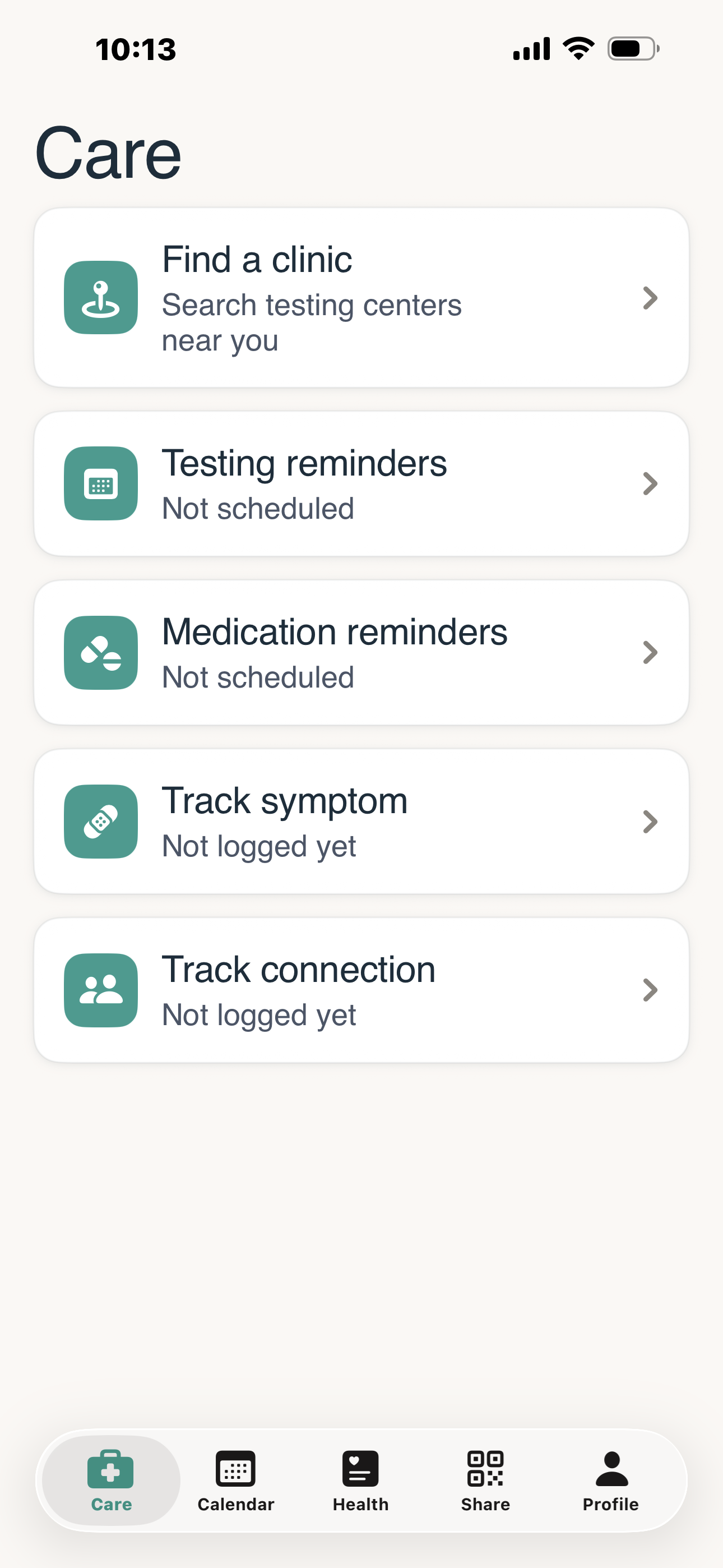
Protecht Care tab showing Find a clinic, Testing reminders, Medication reminders, Track symptom, and Track connection

The Care tab: everything in one place.

Testing reminders, on your schedule

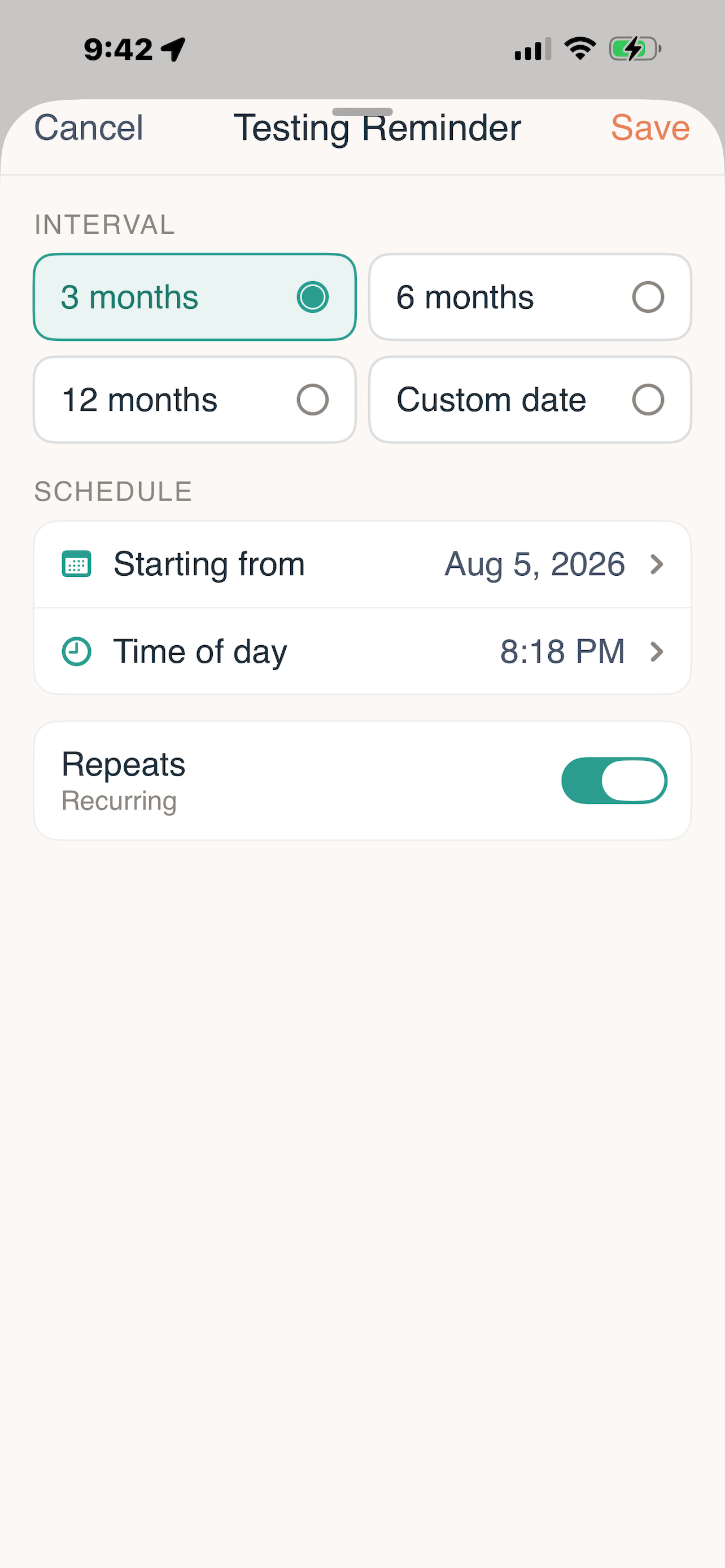
Testing works best when it’s regular, not when it’s remembered at the last minute. Protecht 2.0 lets you set reminders on a 3, 6, or 12 month interval, or pick a custom date that fits your own situation.

When the reminder fires, you test, and your verified result lands in the app ready to share. That’s the loop other tools don’t close: a nudge to test and a trustworthy result live in

Testing Reminder screen with 3, 6, or 12 month interval options, a start date, time of day, and a repeats toggle

the same place.

Medication reminders that stay private

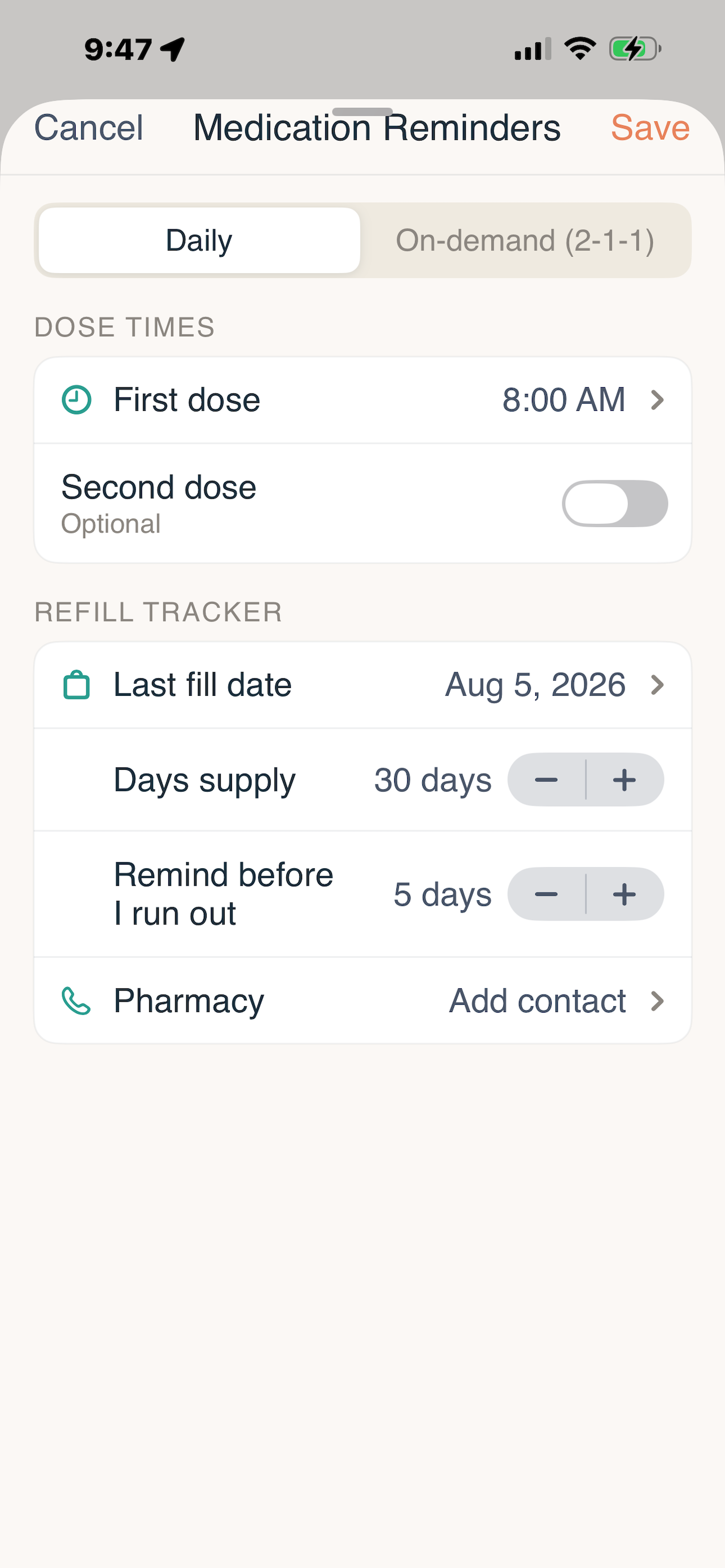
If you’re on PrEP, doxyPEP, or another regimen, Protecht 2.0 can remind you when it’s time to take it, when it’s time to reorder, and support on-demand dosing schedules alongside daily ones.

These reminders are built to be discreet. A notification shouldn’t announce what it’s for to anyone glancing at your lock screen. Your provider sets your regimen. Protecht just helps you keep to it.

Medication Reminders screen, Daily tab, showing first dose time, an optional second dose toggle, and a refill tracker

A place for symptoms

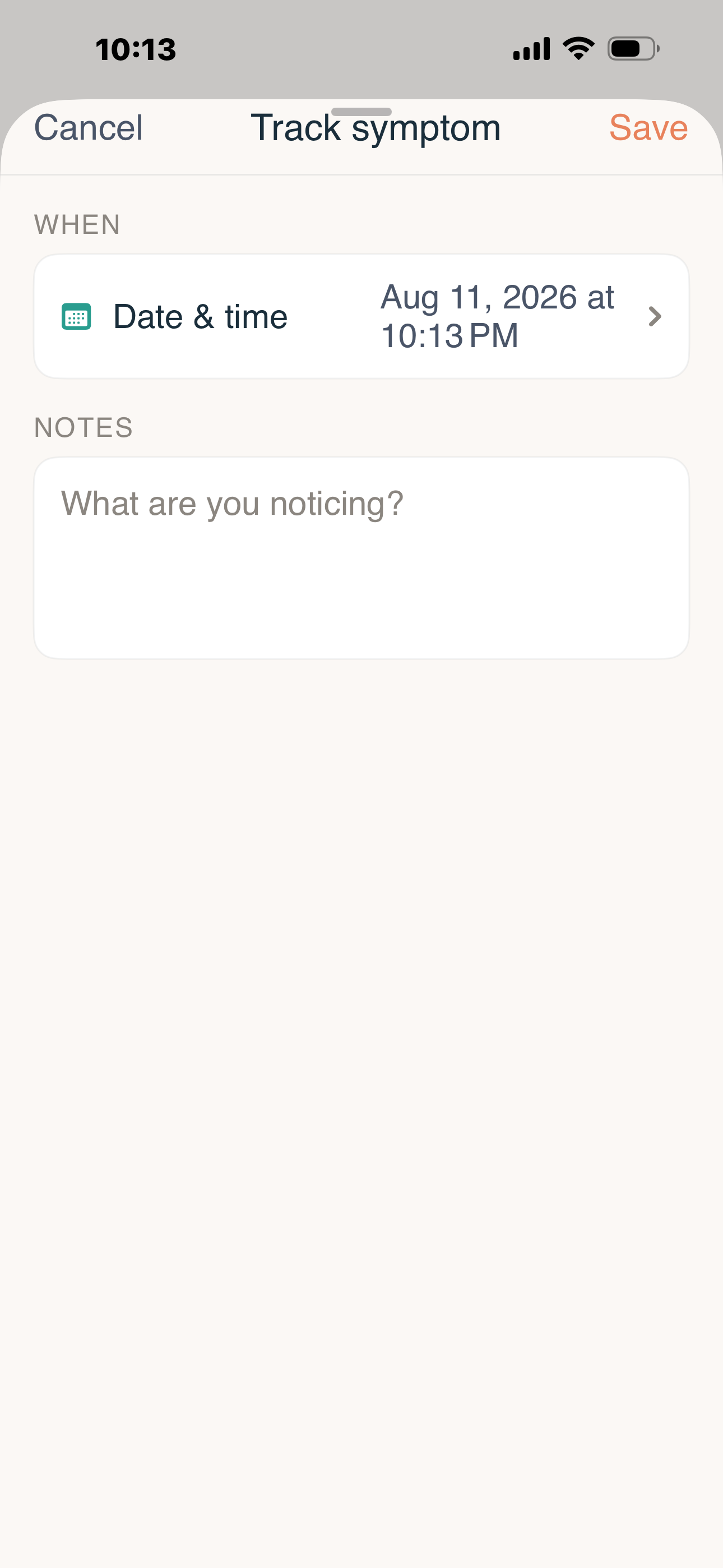
Not every symptom needs a doctor’s visit right away, but it does need to be remembered accurately when you eventually talk to a provider. The new symptom tracker lets you log a date, time, and a short note, so you have a real record instead of a guess about when something started.

Protecht Track symptom form with a date and time field and a notes field

A place for connections

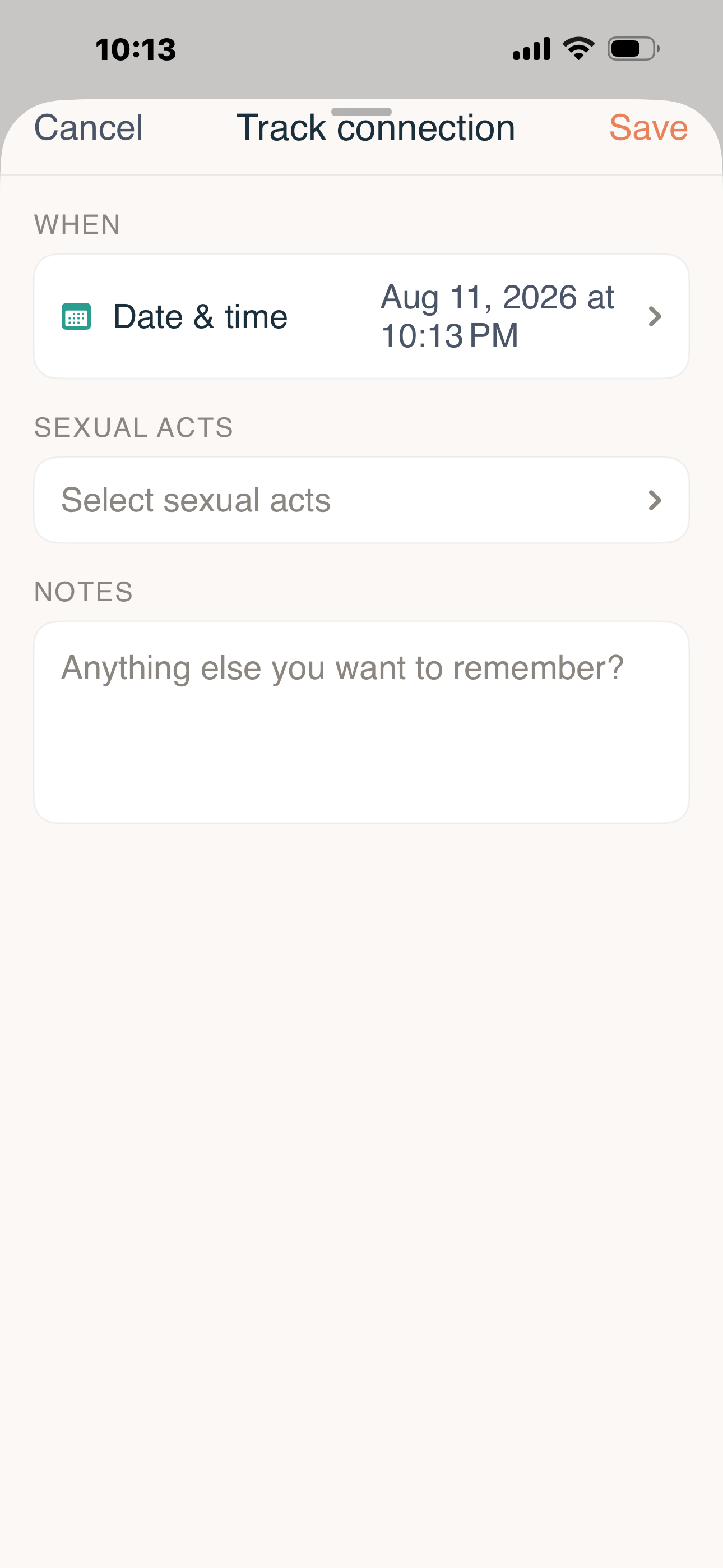
The connection tracker works the same way: a date, a time, a note, and the option to select what kind of contact took place. It’s there so that if you ever need to think through exposure windows or have an informed conversation with a partner or provider, you have your own private record to work from. Nothing here leaves your device unless you choose to share it.

Protecht Track connection form with date and time, sexual acts, and notes fields

One calendar for all of it

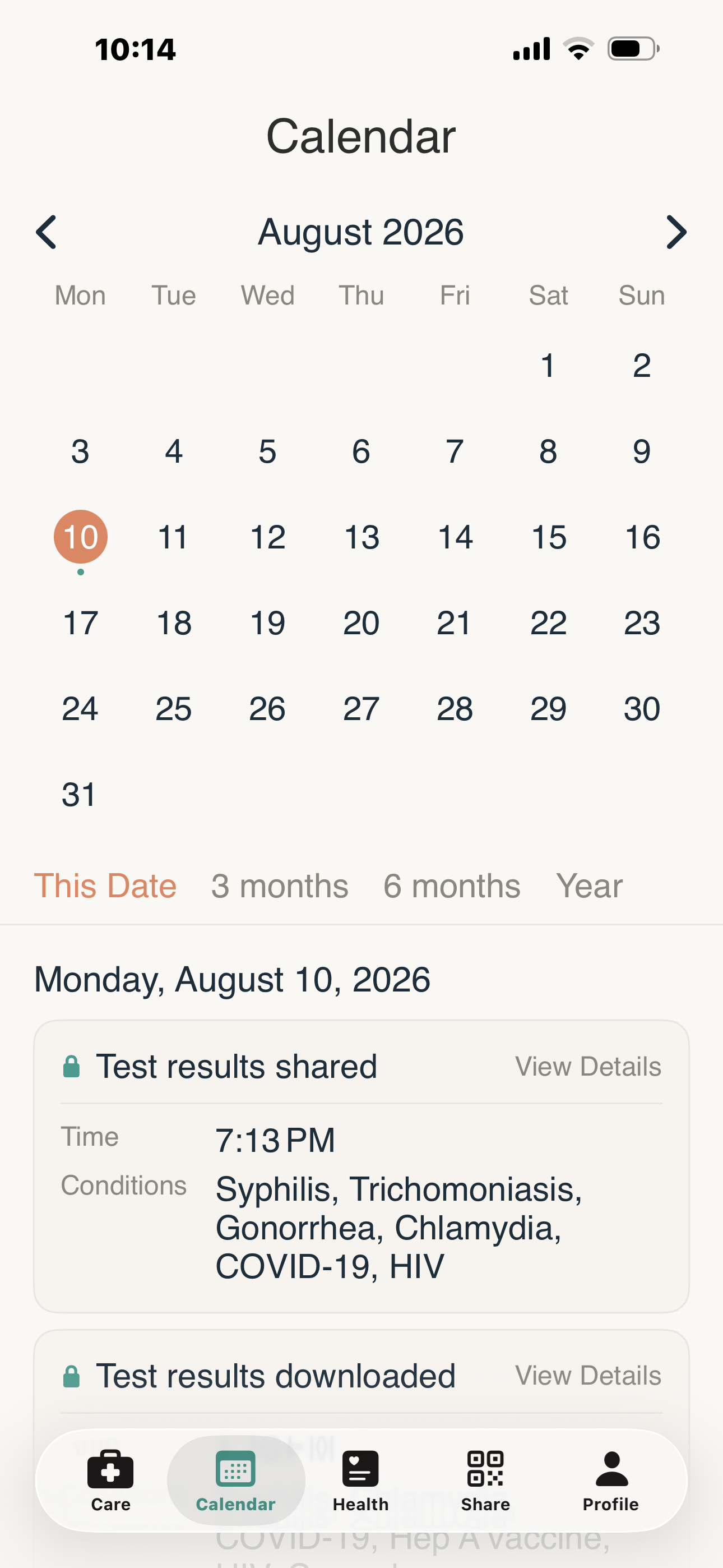
Everything now lives in a single calendar view. Test downloads and shares are logged automatically and can’t be edited, since they’re a record of what actually happened. Symptom and connection entries are yours to add, edit, and manage. The two are visually distinct, so it’s always clear what’s a system record and what’s a personal note.

As with everything in Protecht, this data is encrypted on your device. None of it touches our servers.

Protecht Calendar showing a locked test results shared entry alongside the day's activity

Day Pass, for when you just need it once

Not everyone wants a subscription. The new Day Pass gives you 24 hours of full access to every condition beyond the free HIV tier for $2.99, no commitment required.

Receipts, not promises

Protecht 2.0 is still built on the same principle it started with: your health information should be verifiable, private, and entirely under your control. Now that principle extends to the whole routine around it, not just the moment you get a result.

Update your app or download Protecht free to try it.

Receipts, Not Promises: Protecht Is Live on iPhone

Anyone can say it. Protecht proves it, straight from your provider, untouched.

Today we are launching Protecht on the App Store. It is the first app that pulls your verified STI and HIV results directly from your healthcare provider, stores them encrypted on your phone, and lets you share your status in a way that cannot be faked, edited, or screenshotted.

If you have an iPhone, you can download it right now.

The problem we built this for

Conversations about sexual health run on trust, and trust alone. Someone tells you their status. You tell them yours. There is no way to know whether either answer is current, accurate, or true.

Screenshots get cropped. Dates get blurred. Results get edited. Even when both people are being honest, there is no proof on the table, just words. That gap leaves everyone guessing at the exact moment they most want certainty.

Protecht closes that gap.

What Protecht does

Protecht connects to your provider’s health records and brings your real test results onto your phone, so the status you share is the status your provider actually documented.

  • Your verified STI and HIV results are pulled directly from your provider’s records.
  • They are stored encrypted on your device, never on our servers.
  • You share a read-only view that expires automatically after 60 seconds.

That is the whole idea: your results, verified at the source, shared on your terms.

How it works

  1. Connect your health record and authenticate.
  2. Your results are pulled directly from your provider and stored encrypted on your phone.
  3. You choose exactly what to share and with whom. They cannot alter anything.
  4. Your partner sees a read-only view they cannot edit, or save.
  5. Access expires after 60 seconds. There is nothing to revoke manually.

Why Protecht is different

This is the part that matters most.

Every other option asks you to take someone’s word for it. A text saying they are negative. A photo of a result that may or may not be real. A verbal “I got tested recently.” None of it can be checked.

Protecht results come straight from your provider, and you cannot change them. Not us, not you, not the person you share with. The data is exactly what your provider recorded, delivered untouched. When you show your status through Protecht, your partner is not trusting your word. They are seeing your provider’s record.

Receipts, not promises.

Built for privacy

Protecht treats your health data the way it should be treated.

  • Results are encrypted on your device using AES-256-GCM and the Apple Secure Enclave.
  • Your health information never lives on Protecht’s servers.
  • Sharing is time-limited by design, and every share is logged in an audit trail.

You stay in control of what you share, who sees it, and for how long.

Pricing

Sharing your HIV status is always free. No subscription, no trial, no catch.

If you want to track and share your full set of conditions, Protecht+ is $3.99 per month or $39 per year. Start free, and upgrade whenever you want the complete picture.

Download Protecht today

Protecht is live on the App Store for iPhone.

Download Protecht on the App Store

Your status, verified by your provider, and shared on your terms.