
Global HIV funding whiplash and what it means for testing access at home
Global health funding has had a rough couple of years, and this August brought two announcements that partly reverse course. Neither one is really about testing access in the US directly, but both connect back to the same funding streams that keep community health organizations here running, which is worth understanding even if you never […]

Global health funding has had a rough couple of years, and this August brought two announcements that partly reverse course. Neither one is really about testing access in the US directly, but both connect back to the same funding streams that keep community health organizations here running, which is worth understanding even if you never think about foreign aid.
What actually got announced
On August 6, 2026, the State Department announced nearly 2 billion dollars in new partnerships with faith-based and community organizations to deliver health and humanitarian assistance, including 1.4 billion dollars for integrated health services across more than 20 countries. A few days earlier, the department confirmed it would release 600 million dollars in funding that Congress had already appropriated for Gavi, the Vaccine Alliance, money that had been held up for roughly a year.
Both announcements followed a period of significant disruption. The prior restructuring of federal foreign assistance had already led to canceled grants and contracts across health, nutrition, and emergency relief programs in multiple countries, and the Gavi funding specifically had been frozen over disagreements about vaccine ingredients. Neither issue is fully resolved, but both point toward money moving again after a long pause.
The public wants more of this, not less
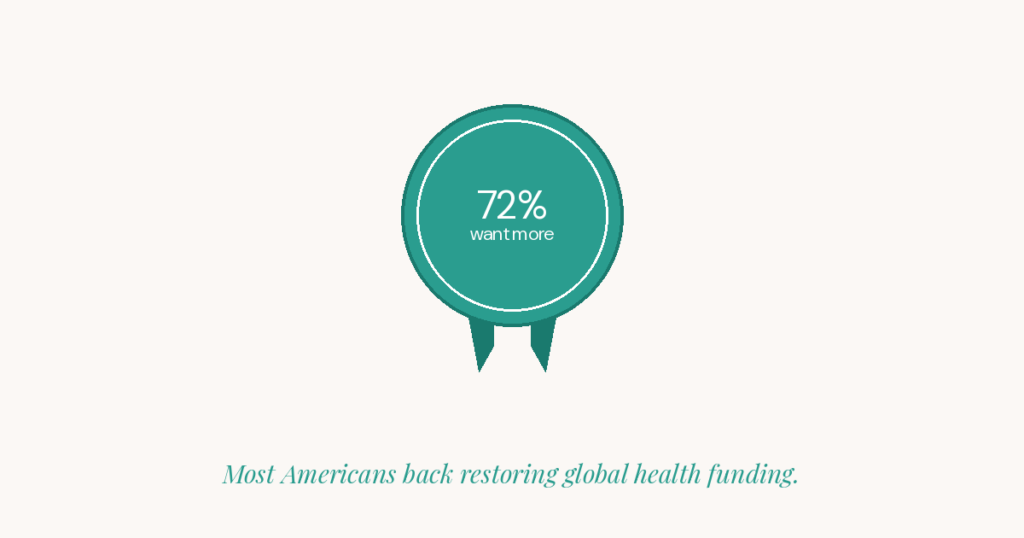
A Rockefeller Foundation poll released this summer found that 72 percent of Americans support restoring some or all global health funding, a figure that held up across party lines even if the specific level of support varied. That is a meaningfully different picture than the one that usually drives funding decisions, where cuts are assumed to be popular and restoration is treated as a hard sell.
Why this connects to domestic testing access
Global funding announcements can feel disconnected from a local clinic’s ability to keep its doors open, but the same instability that hit international programs has rippled through domestic ones too. Programs like Ryan White, Title X, and CDC HIV prevention funding to community organizations have all faced their own periods of uncertainty over the past couple of years, and the organizations we work with, from community health centers to LGBTQ+ centers, feel every one of those funding gaps directly in staffing and hours.
Stability at the federal funding level, whether global or domestic, is what lets local partners keep testing available, keep outreach staffed, and keep the lights on for the people who rely on them. Watching the global funding picture is one way to gauge whether that stability is coming back.
Community partners keep testing accessible.
Protecht works alongside clinics and community health centers, not around them.
The bottom line
Two funding announcements this August do not undo a year of disruption, and the exclusions and conditions attached to both deals show the recovery is uneven. But the direction matters, and the polling suggests the public would support going further. For anyone who relies on a community clinic, a testing site, or a local health center, the health of that funding pipeline, wherever it starts, eventually shows up as whether the doors are open.
Sources
- United States Announces Historic $2 Billion in Health and Humanitarian Assistance to Faith-Based Organizations, U.S. Department of State
- Gavi welcomes United States government commitment to unlock funding for fiscal years 2025 and 2026
- State Department agrees to reinstate vaccine funding for Gavi, CIDRAP
- New Echelon Insights Survey Commissioned by Rockefeller Foundation: Most Americans Back Foreign Aid a Year After USAID’s End
Ready to bring your own?
Download Protecht and share verified status in seconds, not screenshots.

Carry your receipts, not just your word.
Pull your provider-verified results and share a negative status the safe way. Free to download.