What the Research Actually Found
A study published March 31, 2026 in Archives of Sexual Behavior looked at communication and boundary-setting habits among people in consensual non-monogamous relationships, identifying nine core habits linked to relationship satisfaction, commitment, and investment. One of the nine was sexual health maintenance, and the researchers found that couples who treated ongoing attention to sexual health as a shared, active practice, rather than a one-time conversation or an afterthought, reported stronger relationship outcomes across nearly every measure.
That tracks with what a lot of experienced non-monogamous folks already say out loud: the health conversation is not separate from the intimacy, it is part of it. Handling it well is not a chore you get through before the good part starts. It is one of the habits that makes the good part sustainable.
The Gap Between “We Talked About It” and Actually Knowing
Here is where things usually get shaky, even in relationships that are otherwise communicating well. “We talked about it” and “we both know current, verified status” are two very different things. A conversation is easy. Someone can say “I got tested last month, I’m negative” in about four seconds, and it can be entirely true or it can be six months out of date or it can just be wrong, and the other person has no way to tell the difference from across the dinner table.
This is not about assuming anyone is lying. Most people are not. But memory is unreliable, timelines get fuzzy, and “recently” means something different to everyone. A verified result, timestamped and specific, closes that gap without requiring anyone to take on the role of interrogator with a partner they trust and care about.
This is the whole idea behind Receipts, Not Promises. It is not about distrust. It is about giving the trust something solid to stand on, so the emotional conversation about fluid bonding can stay about the relationship, not turn into an audit.
What This Looks Like in Practice
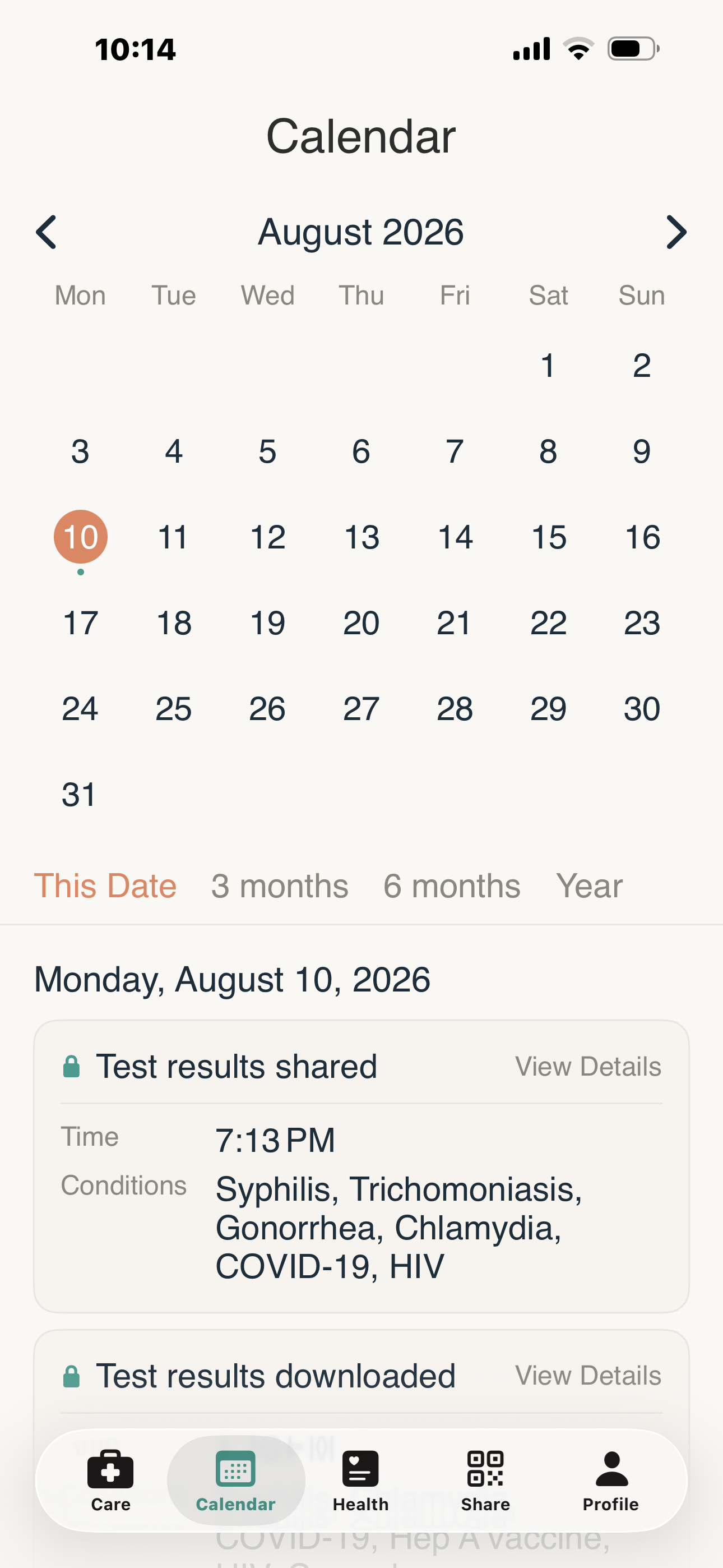
For pods and polycules, the logistics multiply fast. If four people are all making individual decisions about barriers with each other, that is potentially six separate conversations, six separate timelines, six separate memories of what was said and when. Protecht lets each person share a verified status directly, so instead of a partner playing telephone (“she said he said he got tested”), everyone in the pod can see the actual result, dated, from the actual person.
That matters most in swinger communities specifically, where relationships often move between committed partners and situational partners inside the same week. The habits that work for a primary relationship, checking in occasionally, trusting a verbal update, do not scale cleanly to a broader network. Verified sharing does.
Fluid Bonding Is a Decision, Not a Default
None of this is about telling anyone to fluid bond or not to. That decision belongs entirely to the people involved, and plenty of thriving non-monogamous relationships never go there at all, by choice. The point is that whatever the decision is, it deserves to be made with real information instead of good intentions and fuzzy memory.
The nine-habits study is useful here because it reframes sexual health maintenance as an active relationship skill, something you build together over time, the same way you build communication habits or conflict resolution habits. It is not a one-time hurdle. It is ongoing, and the tools you use to manage it should be too.
Receipts, not promises, is not a slogan we came up with for a pitch deck. It describes something people in non-monogamous relationships have been asking for for a long time: a way to know, not just a way to be told.
Sources
- Psychologists identify nine core habits associated with healthy non-monogamous partnerships — PsyPost, reporting on a study published March 31, 2026 in Archives of Sexual Behavior identifying sexual health maintenance as one of nine habits linked to relationship satisfaction and commitment among consensually non-monogamous couples.
Receipts, not promises.
Share verified status across your whole pod, on your terms.